Exploring the Timeless Lakes of Udaipur
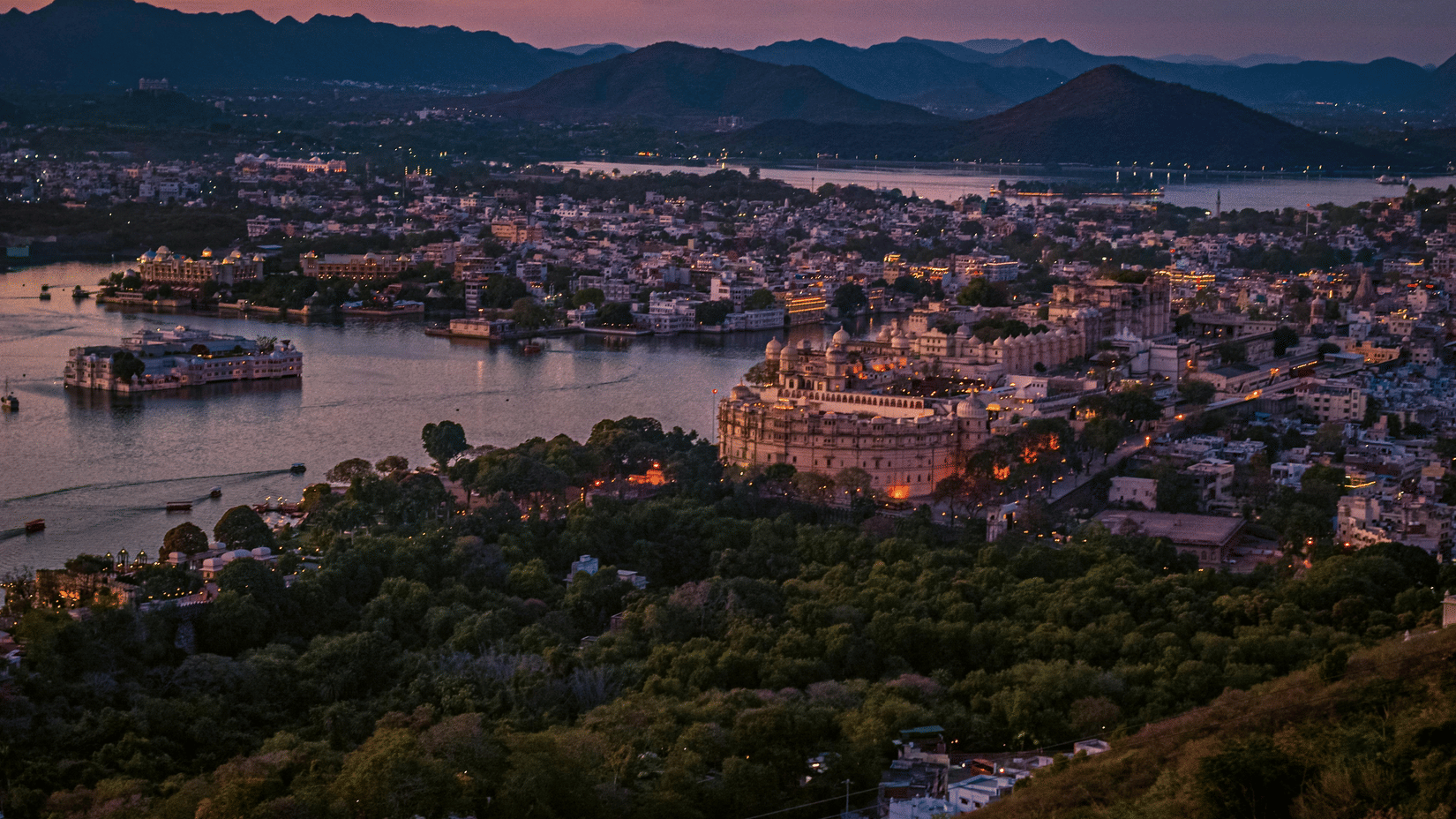
No visit to Udaipur is complete without spending time on or beside its iconic lakes. These artificial reservoirs, built over centuries by the Mewar rulers, remain the soul of the city, reflecting palaces, catching sunsets, and cooling the desert heat.
Lake Pichola
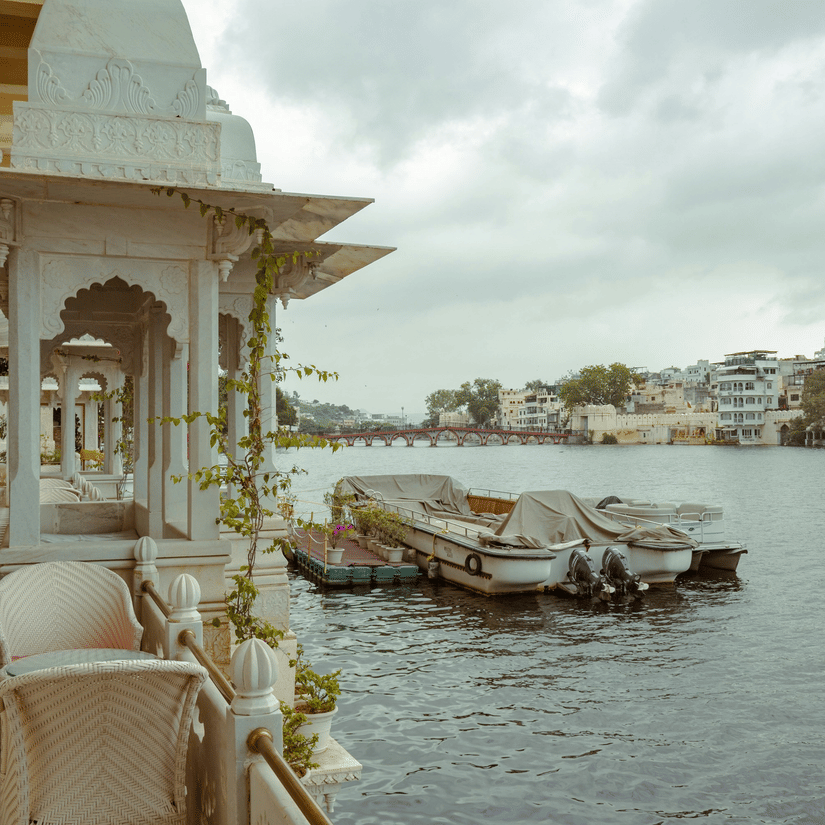
Lake Pichola, the jewel of Udaipur, home to the iconic Lake Palace and Jag Mandir islands.
Dating to 1362, Lake Pichola is Udaipur's oldest and most celebrated lake. Its glassy waters reflect the City Palace, the Jag Mandir island palace, and the famous Taj Lake Palace hotel, a sight that has captivated travellers for centuries. Boat rides depart from the City Palace jetty and let you experience the lake from the water, drifting past carved ghats and ancient temples.
Fateh Sagar Lake
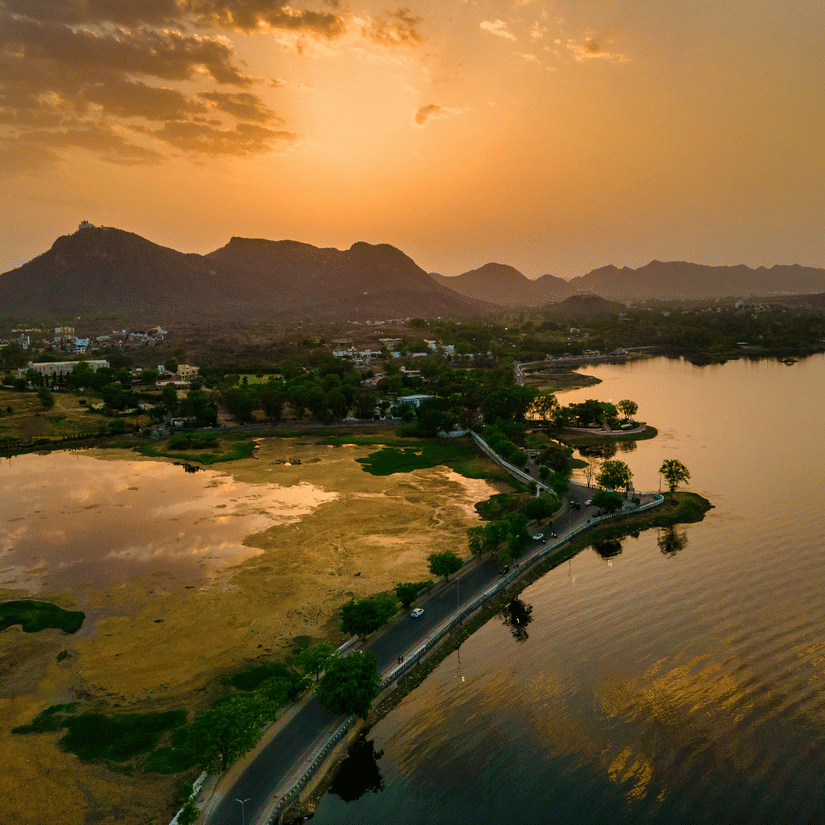
Fateh Sagar Lake, with Nehru Park island and the distant Aravallis at dusk.
Built in the 1680s and later rebuilt by Maharana Fateh Singh, Fateh Sagar Lake sits at a higher elevation than Pichola and offers a distinctly different atmosphere, wider, quieter, and framed by forested hills. The lake features three small islands: Nehru Park (a garden island accessible by boat), a public park, and a solar observatory. The promenade along its eastern shore is one of Udaipur's finest evening walks.
Badi Lake
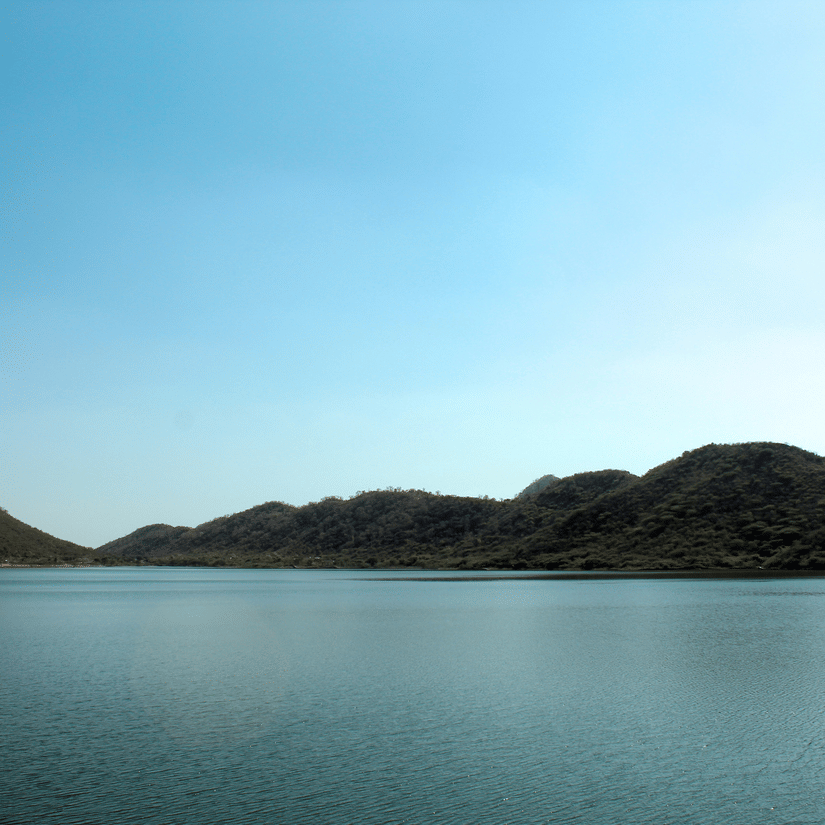
Badi Lake, Udaipur's quietest escape, ringed by forested Aravalli hills.
Built in the 17th century as a rainwater reservoir, Badi Lake is Udaipur's quietest and most scenic escape, far from the tourist crowds, surrounded by forested Aravalli hills that mirror perfectly in the still water. It is a favourite among photographers, birdwatchers, and those who simply want to sit in silence with a view. Boat rides are available at the modest jetty near the main road.
Discover the Forts & Palaces that Define Rajasthan
Udaipur's royal heritage is most powerfully expressed in its forts and palaces, colossal structures built by the Mewar dynasty over four centuries, each one a story of ambition, artistry, and power.
City Palace
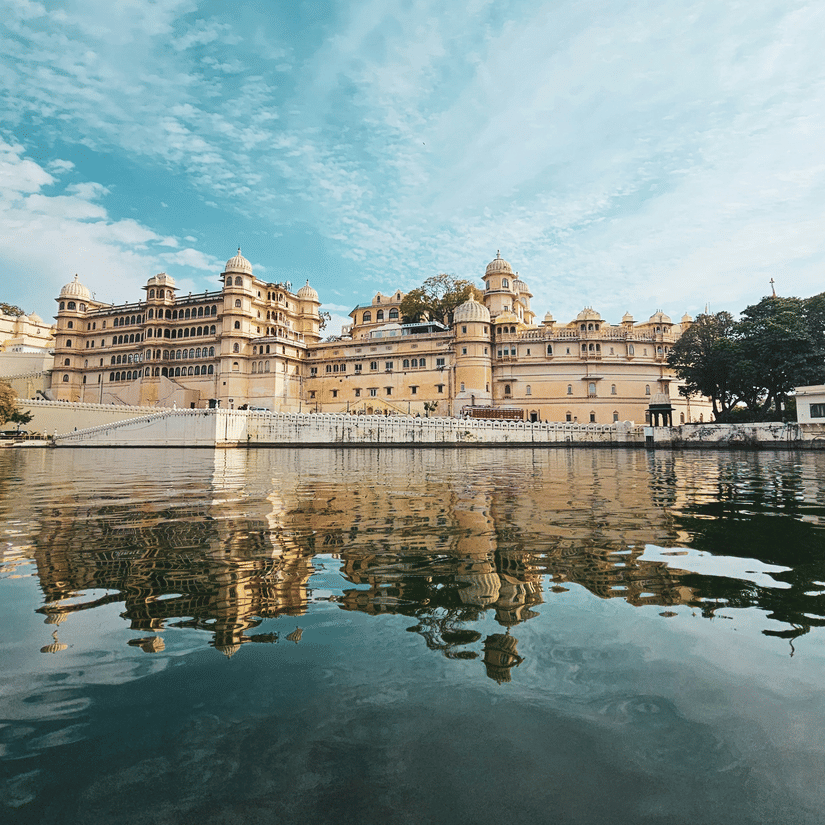
The City Palace complex, over four centuries of Mewar architecture rising above Lake Pichola.
Construction of the City Palace began in 1553, and successive Maharanas added to it over the next 400 years, creating the largest palace complex in Rajasthan. The palace is actually a series of interconnected palaces, courtyards, and terraces, each layer revealing a different era of Mewar history. Highlights include Mor Chowk (Peacock Courtyard), the Dilkhush Mahal, and panoramic terraces overlooking Lake Pichola. The City Palace Museum houses one of the finest collections of Mewar royal artefacts in existence.
Sajjangarh Palace (Monsoon Palace)
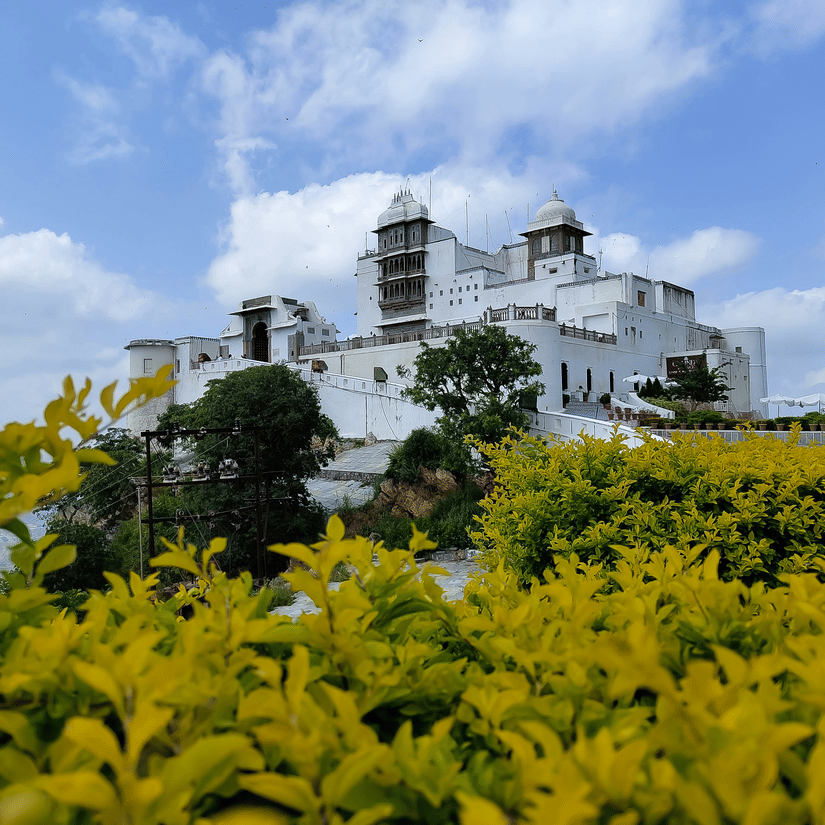
Sajjangarh Palace, perched at 944 metres, commanding sweeping views across Udaipur's lakes and rooftops.
Perched at 944 metres above sea level on the Bansdara hill, Sajjangarh Palace was built in the late 19th century by Maharana Sajjan Singh as an astronomical centre and retreat, though it was most beloved as a place to watch the monsoon clouds arrive. The palace offers arguably the finest panoramic view in all of Udaipur, with the entire city, its lakes, and the distant Aravallis spread below. The drive up through the forest reserve is itself an experience, especially at dusk.
Kumbhalgarh Fort
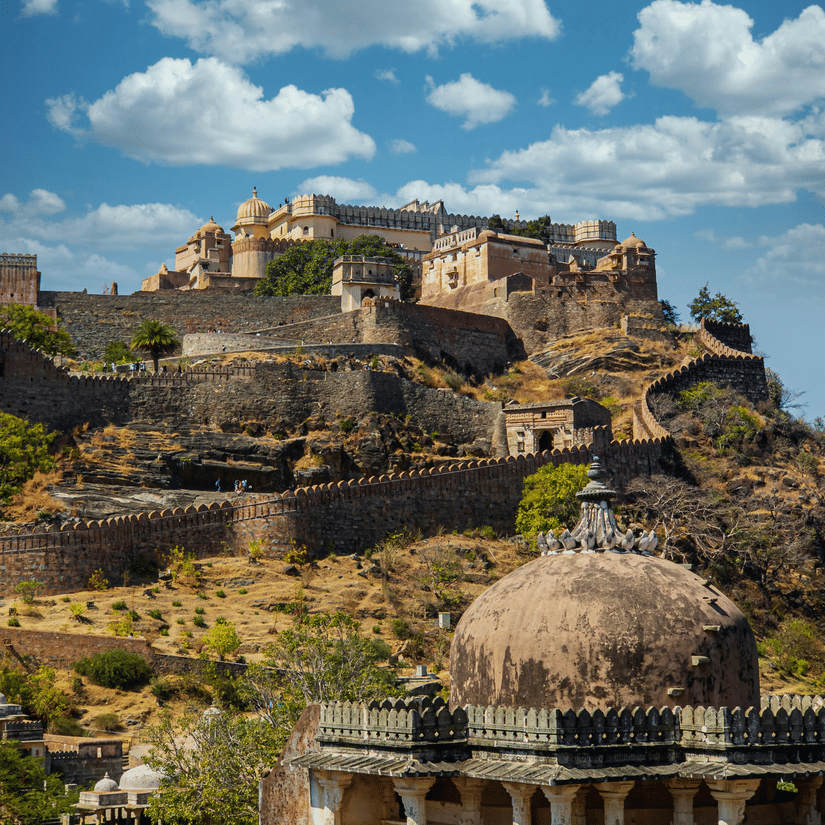
Kumbhalgarh, the Great Wall of India, stretching 36 km through the Aravallis.
Located 84 km from Udaipur, Kumbhalgarh Fort is a UNESCO World Heritage Site and one of India's greatest military fortresses. Built in the 15th century by Maharana Kumbha, it is ringed by a wall that stretches over 36 kilometres, earning it the nickname "The Great Wall of India." Within its ramparts lie 360 temples, royal palaces, step-wells, and gardens. The fort is also the birthplace of the legendary Maharana Pratap. Fateh Collection's Fateh Safari Resort sits at its very foot, making it the ideal base for exploring Kumbhalgarh.
The Temples & Quiet Ghats that Shape Udaipur
Away from the grand palaces, Udaipur's spiritual geography unfolds along its lake shores, ancient temples, worn ghats, and the daily rituals of a city that has never stopped being sacred.
Jagdish Temple
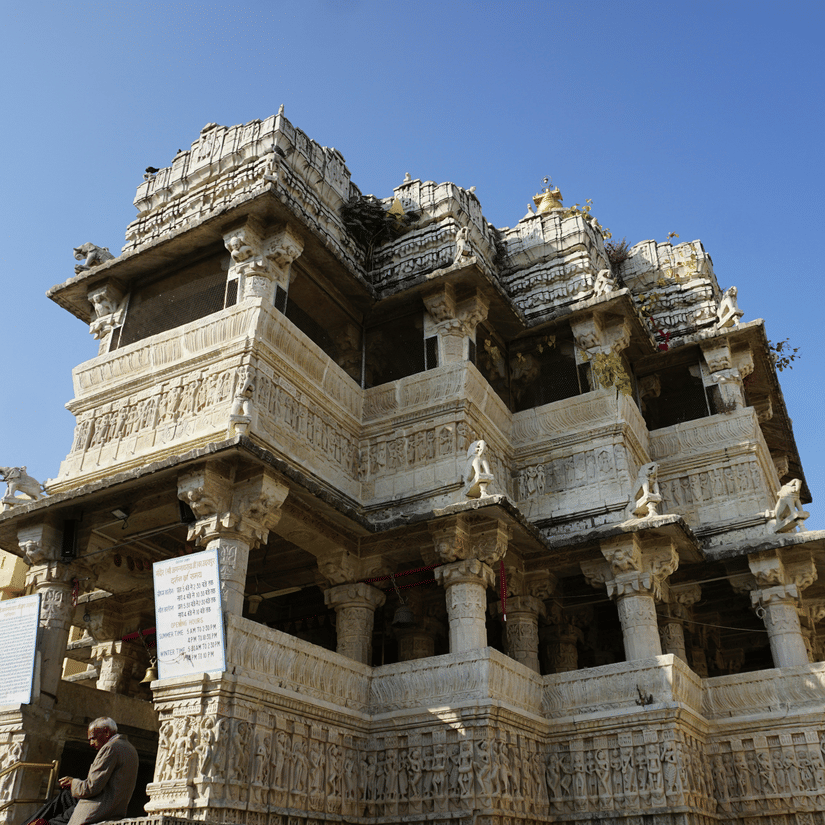
Jagdish Temple, an Indo-Aryan masterpiece with intricate carvings rising over 32 marble steps.
Built in 1651 by Maharana Jagat Singh I, the Jagdish Temple is Udaipur's most important and architecturally magnificent temple, a towering Indo-Aryan masterpiece dedicated to Lord Jagannath (Vishnu). The temple rises on 32 marble steps and is guarded by a massive brass statue of Garuda. Its exterior is covered in intricate carvings of elephants, horsemen, dancers, and celestial beings. The temple remains active and alive with devotees throughout the day, its bells echoing across the adjacent lake.
Ambrai Ghat
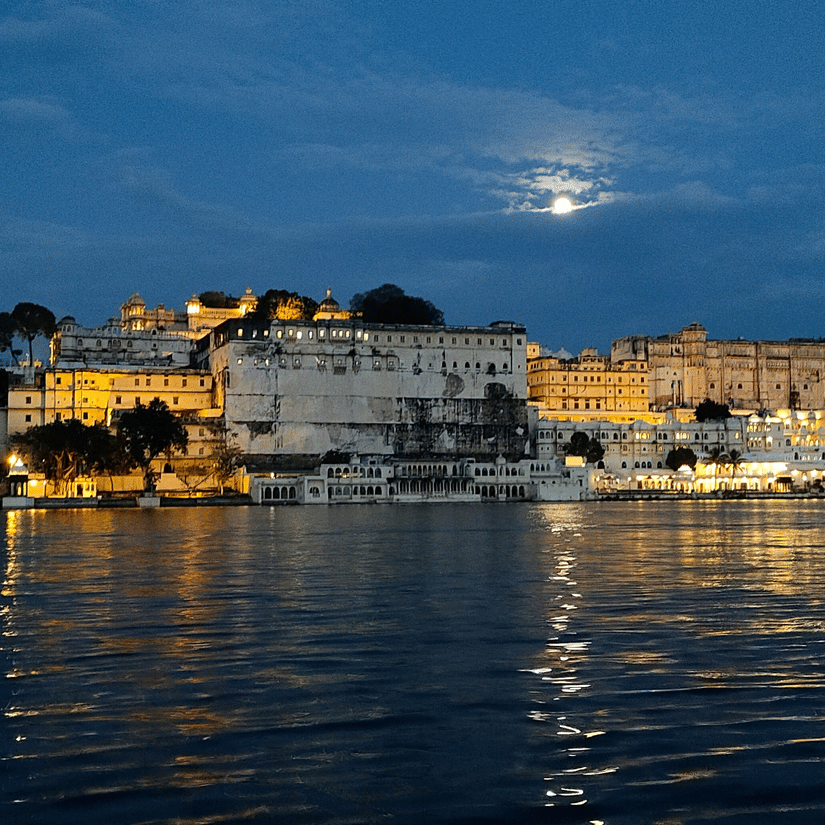
Ambrai Ghat, the City Palace glowing across Lake Pichola as seen from the eastern shore at night.
Ambrai Ghat sits directly opposite the Lake Palace on the eastern shore of Lake Pichola, offering one of the most photographed views in Rajasthan. The ghat itself is ancient, its worn stone steps descending to the water's edge, fringed by old trees and traditional havelis. It is a photographer's paradise at golden hour, with the white marble of the Lake Palace shimmering across the water. The adjacent Ambrai Restaurant makes it easy to linger here well into the evening.
Gangaur Ghat
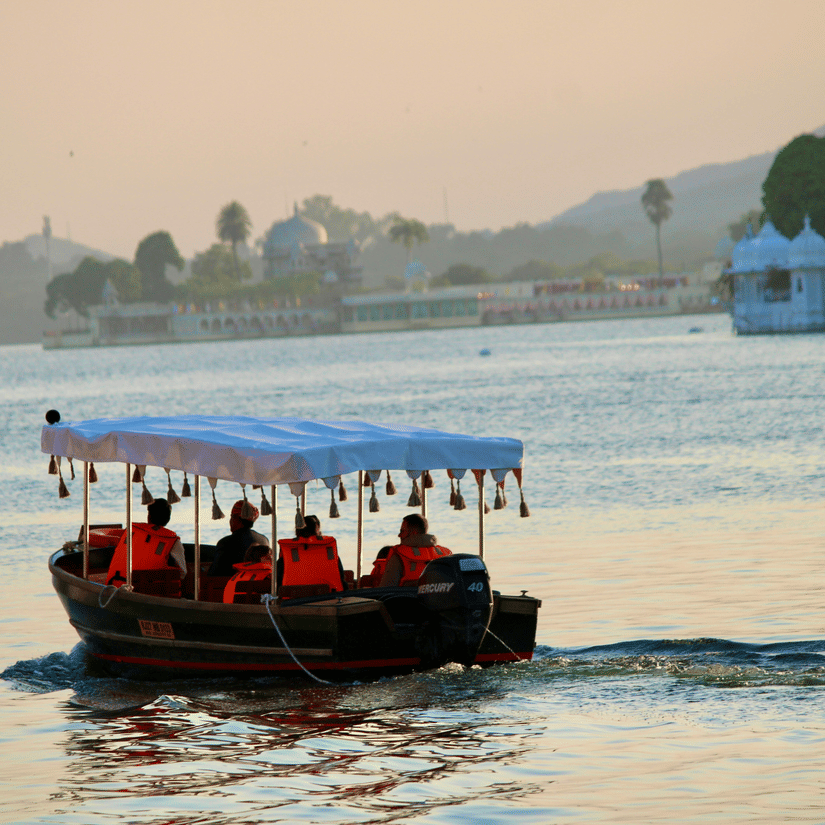
Gangaur Ghat, painted boats on Lake Pichola at dusk, with the Aravalli hills beyond.
One of the most scenic and historically significant ghats in Udaipur, Gangaur Ghat is the site of the annual Gangaur Festival, when idols of Goddess Gangaur (Parvati) are carried in a grand procession to the water. The ghat sits between the City Palace and the old city, its steps leading directly to Lake Pichola. Painted boats, ancient trees, and views across the water to the hills make it a serene place to sit and watch the city move at its own rhythm.
The Most Beautiful Gardens & Parks in Udaipur
Udaipur's gardens are a legacy of Mewar's love of nature, royal retreats built around water, designed for pleasure, and now open to all who wish to wander through them.
Saheliyon Ki Bari
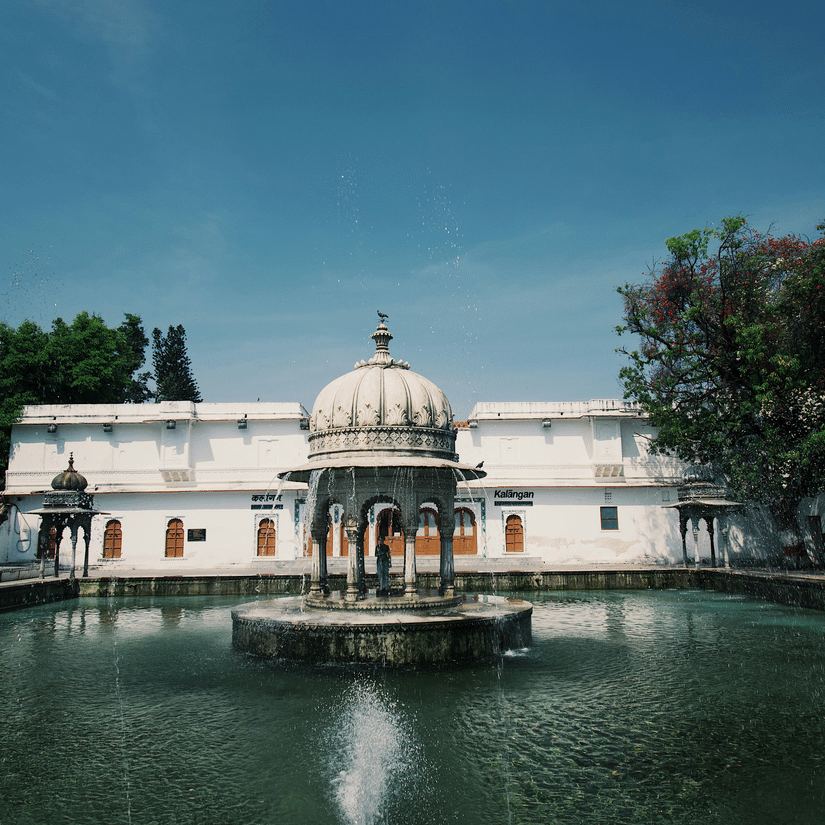
Saheliyon Ki Bari, the Garden of the Maidens, with its remarkable gravity-fed fountains intact after centuries.
Built in the 18th century as a retreat for the royal ladies of the Mewar court, Saheliyon Ki Bari (Garden of the Maidens) is a marvel of Rajput landscaping, marble pavilions, elephant-shaped fountains, lotus ponds, and a kiosk museum, all fed by a gravity-flow water system still functioning after 300 years. The garden is modest in size but extraordinarily well-preserved, a pocket of calm ornamentation in the middle of the city.
Sajjangarh Biological Park
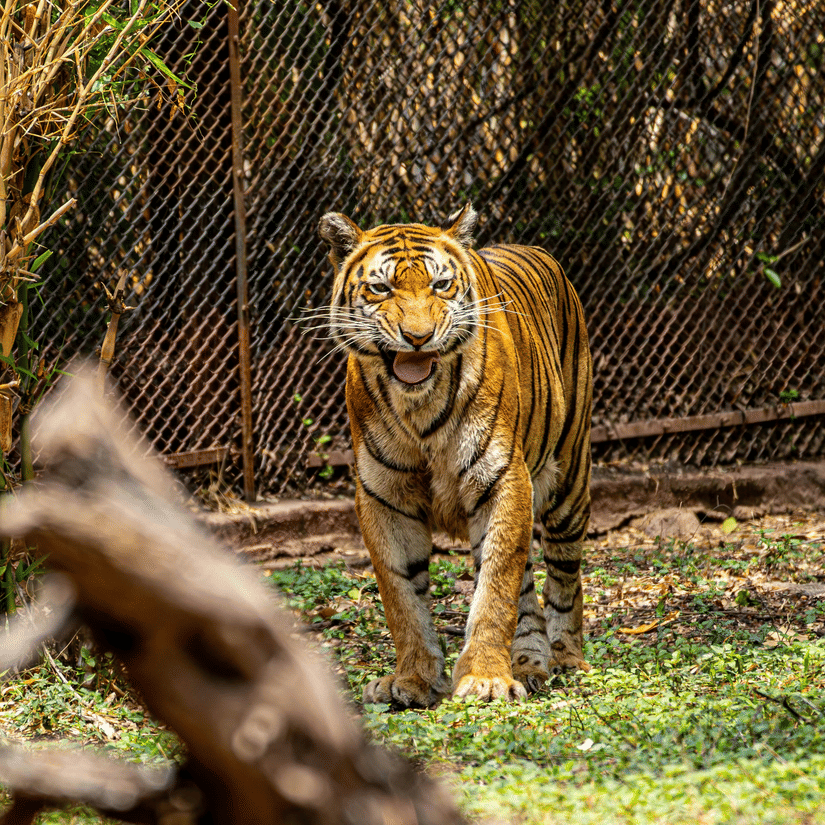
Sajjangarh Biological Park, one of Rajasthan's most important wildlife conservation centres, home to Bengal tigers and leopards.
Spread across 36 hectares on the hillside below Sajjangarh Palace, this biological park houses Bengal tigers, leopards, crocodiles, sloth bears, hyenas, and over 50 species of birds in semi-natural enclosures. It is one of western Rajasthan's most important wildlife conservation centres. The park can be combined with a visit to the palace above for a full half-day excursion.
Gulab Bagh
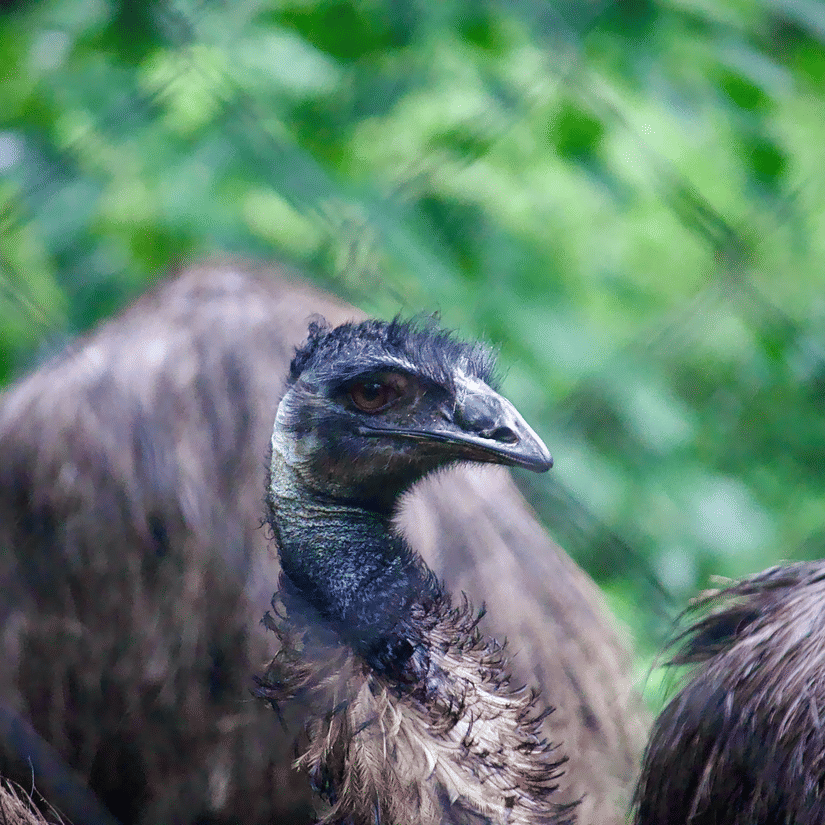
Gulab Bagh, 100 acres of gardens, rose conservatory, and a small zoo in the heart of Udaipur.
Established in 1881 by Maharana Sajjan Singh, Gulab Bagh, the Rose Garden, is Udaipur's oldest and largest public garden at 100 acres. Originally home to an extraordinary variety of roses (gulabs) brought from across India and abroad, the garden today includes a small zoo, a toy train, a library, a rose conservatory, and vast shaded lawns. It is a favourite with local families and offers a refreshing break from the bustle of the old city.
Cultural Spots that Tell Udaipur's Story
Beyond its architecture, Udaipur is a city of living culture, folk music, classical dance, miniature painting, and centuries-old craft traditions that continue to thrive in its bazaars, havelis, and open-air amphitheatres.
Bagore Ki Haveli
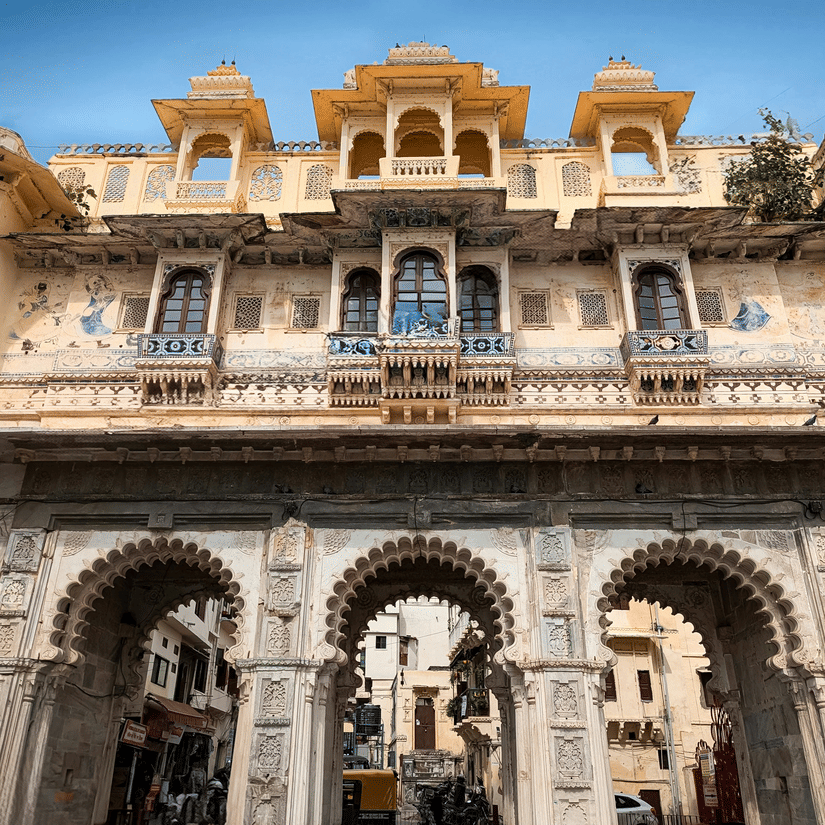
Bagore Ki Haveli, 138 rooms of royal Mewar history on the banks of Lake Pichola.
Bagore Ki Haveli is an 18th-century mansion on the banks of Lake Pichola, once the home of Amir Chand Badwa, the chief minister of Mewar. Its 138 rooms now function as a museum of royal Mewar life, displaying turbans, costumes, jewellery, and artefacts from across the centuries. Every evening, the courtyard transforms for the celebrated Dharohar folk show: an hour of Rajasthani folk dance, puppet theatre, classical music, and the iconic fire dance. It is one of the finest cultural performances in Rajasthan.
Shilpgram
Shilpgram is a 70-acre rural arts and crafts complex on the banks of Fateh Sagar Lake, created to preserve and promote the traditional crafts, music, and architecture of western India. Its 26 authentic tribal huts from Rajasthan, Gujarat, Goa, and Maharashtra have been reconstructed here in full, each inhabited by artisans demonstrating their traditional skills, weaving, pottery, leatherwork, block printing, and more. The annual Shilpgram Utsav (December 21–31) draws craftspeople and performers from across the country in one of India's most vibrant folk festivals.
Where to Find the Best Views in Udaipur
Udaipur is a city best understood from a height, where the lakes, palaces, and Aravalli ridgelines arrange themselves into the landscape that has inspired painters and poets for centuries.
Machla Magra Hills & Cable Car
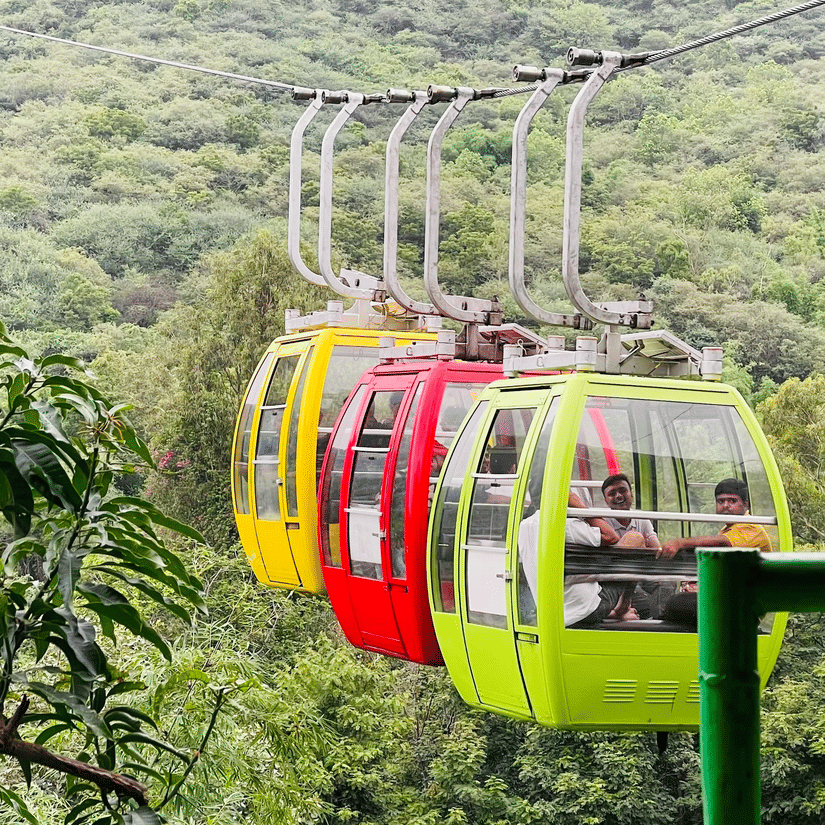
The Machla Magra cable car, 387 metres over forested hills to sweeping views of Fateh Sagar Lake.
The Machla Magra hills rise directly above Fateh Sagar Lake, and the cable car from Doodh Talai Park carries passengers 387 metres up through forested canopy to a hilltop with 360-degree views of the city, its lakes, and the Aravallis beyond. The ride itself is thrilling and the view from the summit, especially at sunset, is among the finest in Udaipur. The hilltop also has a restaurant and a park with sculptures and viewpoints at different elevations.
Distances from Fateh Vilas, Udaipur
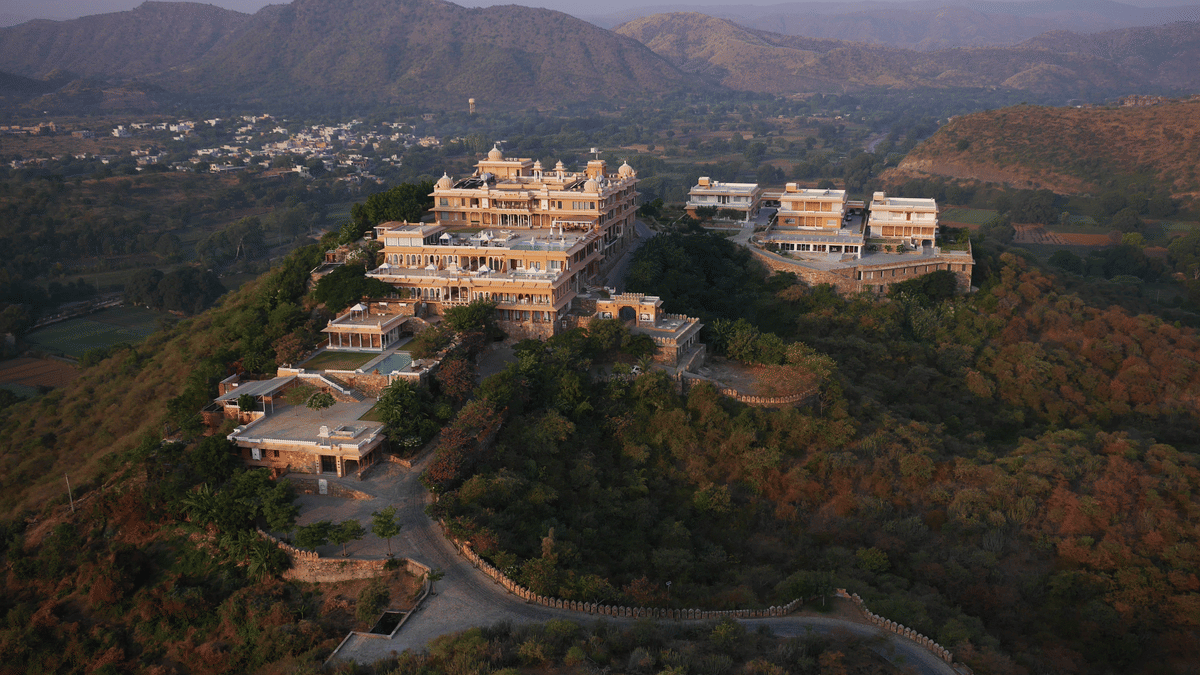
Fateh Vilas is located on Sisarma-Bujara Road, on the elevated western edge of Udaipur, ideally placed to reach all the major attractions below.
| Attraction | Distance from Fateh Vilas |
|---|---|
| City Palace | 7 km (approx. 20 min) |
| Lake Pichola Jetty | 7 km (approx. 20 min) |
| Jagdish Temple | 7 km (approx. 20 min) |
| Ambrai Ghat | 8 km (approx. 22 min) |
| Gangaur Ghat | 7.5 km (approx. 20 min) |
| Bagore Ki Haveli | 7.5 km (approx. 20 min) |
| Fateh Sagar Lake | 5 km (approx. 14 min) |
| Saheliyon Ki Bari | 5 km (approx. 14 min) |
| Sajjangarh Palace | 4 km (approx. 12 min) |
| Sajjangarh Biological Park | 5 km (approx. 14 min) |
| Shilpgram | 5 km (approx. 14 min) |
| Gulab Bagh | 7 km (approx. 20 min) |
| Machla Magra Cable Car | 5 km (approx. 14 min) |
| Badi Lake | 10 km (approx. 25 min) |
| Kumbhalgarh Fort | 87 km (approx. 2 hrs) |
Frequently Asked Questions
The must-see attractions in Udaipur are City Palace, Lake Pichola (with its boat ride), Jagdish Temple, Sajjangarh Monsoon Palace, Saheliyon Ki Bari, Bagore Ki Haveli, Fateh Sagar Lake, and the Machla Magra hilltop cable car. For a day trip, Kumbhalgarh Fort (84 km away) is well worth the journey.
Two to three full days are ideal for covering Udaipur's highlights at a relaxed pace. Day one for the City Palace, Lake Pichola boat ride, Jagdish Temple, and Ambrai Ghat at sunset. Day two for Sajjangarh, Saheliyon Ki Bari, Fateh Sagar, and the Dharohar folk show at Bagore Ki Haveli. A third day works well for a trip to Kumbhalgarh Fort or a morning at Badi Lake.
A first-time visitor should prioritise the City Palace (allow 2–3 hours), a sunset boat ride on Lake Pichola, the Dharohar evening folk show at Bagore Ki Haveli, and a morning stroll along Gangaur Ghat. These four experiences capture the essence of Udaipur, royal history, the lake's magic, living culture, and the city at its most peaceful.
Absolutely. Kumbhalgarh Fort is one of India's greatest historical sites, a UNESCO World Heritage monument with a 36 km wall, 360 temples, and stunning Aravalli landscapes. The 84 km drive from Udaipur takes roughly 2 hours and passes through beautiful countryside. Staying at Fateh Safari Resort at the fort's base lets you explore the fort across two days in depth, including the dramatic light-and-sound show after dark.
For a panoramic city view, Sajjangarh Palace at sunset is unmatched, the entire city, lakes, and Aravallis spread below in the fading light. For a lake-level view, Ambrai Ghat facing the Lake Palace is the most photographed spot. The Machla Magra cable car summit offers an excellent mid-range aerial perspective. Many visitors rate the rooftop restaurants around Gangaur Ghat as offering the most intimate lake views at dusk.
October to March is the ideal window, temperatures are comfortable (15–28°C), the lakes are full after the monsoon, and the light is clear for photography. November and February are peak months with the most cultural events. The monsoon (July–September) is spectacular for those who enjoy the drama of full lakes and lush green hills, though some outdoor attractions may be limited. Summer (April–June) is hot but manageable with early morning and evening sightseeing.