
Fateh Garh facade

Discover Fateh Collection in...

Udaipur Kumbhalgarh Ranthambhore

Sustainability at Fateh Collection

Rooted in the Elements

Not an initiative—a way of being

At Fateh Collection, sustainability is not a programme bolted onto the business. Built in harmony with the land and guided by traditional wisdom, each property is designed to exist with minimal disruption to its natural surroundings.

Powered predominantly by solar energy and supported by conscious design, our approach is structured around the four elements—Agni (Energy), Prithvi (Earth), Jal (Water) and Vayu (Air). Together they shape a system that is self-aware, resourceful, and deeply connected to the environment it inhabits.

Agni · Our Solar Impact

Powered by the Rajasthan Sun

Through our solar energy initiatives, we have already saved 5,410 tonnes of CO₂ emissions—and continue to eliminate 670 tonnes of CO₂ annually. To put that impact into perspective, our yearly solar savings are equivalent to planting 33,500 mature trees, or avoiding the burning of 340 tonnes of coal every single year.

5,410
Tonnes of CO₂
saved to date
670
Tonnes of CO₂
eliminated annually
33,500
Mature trees planted,
in equivalence
340
Tonnes of coal
avoided every year

Figures as of 1st August 2026.

Guided by balance.

The Four Elements

Every practice across our properties belongs to one of four elemental disciplines—a framework drawn from traditional wisdom and applied to the running of a modern hotel.

Agni · Energy

Harnessing light, minimising impact.

  • Solar energy is used extensively for hot water generation and to support overall energy requirements.
  • Pathways and outdoor areas are illuminated through solar-powered lighting.
  • Kitchens use solar-heated water and solar cookers for bulk preparation.
  • Bio-gas is used as an alternative fuel source for staff kitchens.
  • Energy-efficient LED lighting is used across the property to reduce consumption.
  • Smart room systems ensure electricity is conserved when rooms are unoccupied.
  • Buildings are designed as per Vaastu principles to naturally regulate temperature—maximising winter sun and minimising summer heat.
Prithvi · Earth

Building with respect for the land.

  • Only a small portion of the land is built upon, with the majority preserved as natural green cover.
  • Indigenous plant species are cultivated, requiring minimal water and maintenance.
  • Large-scale plantation of native trees such as Neem and Peepal supports ecological balance.
  • Soil conservation is ensured through contour bunding and slope management.
  • Organic farming practices are followed, with fruits, flowers and herbs grown without chemicals.
  • Reclaimed stone and recycled wood are used extensively in construction and interiors.
  • Antique furniture is repurposed, reducing the need for new resources.
  • All materials are locally sourced, minimising transportation impact.
  • Lime plaster is used instead of chemical paints, allowing buildings to breathe naturally.
  • Minimal use of plastics, with recycling systems integrated across the property.
Jal · Water

Preserving and respecting every drop.

  • Rainwater harvesting systems recharge groundwater through traditional methods.
  • Grey water is treated and reused for landscape irrigation.
  • Drip and sprinkler systems optimise water usage across plantations.
  • Landscapes are intentionally kept natural to reduce water demand.
  • Water-efficient plumbing systems reduce overall consumption.
  • Public spaces are fitted with controlled water dispensing systems.
  • Guests are encouraged to participate in conservation through mindful linen and towel usage.
  • Traditional stepwell-inspired structures honour the cultural and ecological significance of water.
Vayu · Air

Designing for breath and balance.

  • Architectural planning ensures natural ventilation across spaces, reducing reliance on artificial cooling.
  • Windows and structural orientation allow seasonal airflow—cooling in summers and insulation in winters.
  • Energy-efficient appliances are used across all rooms and facilities.
  • Use of natural, eco-friendly toiletries reduces chemical impact on the environment.
  • Recycled materials are used for stationery and daily operations.

Building with the land, not over it.

Conservation Practices

Across each property, architecture and operations are guided by a philosophy of minimal intervention, material reuse, and a deep sensitivity to the surrounding ecosystem.

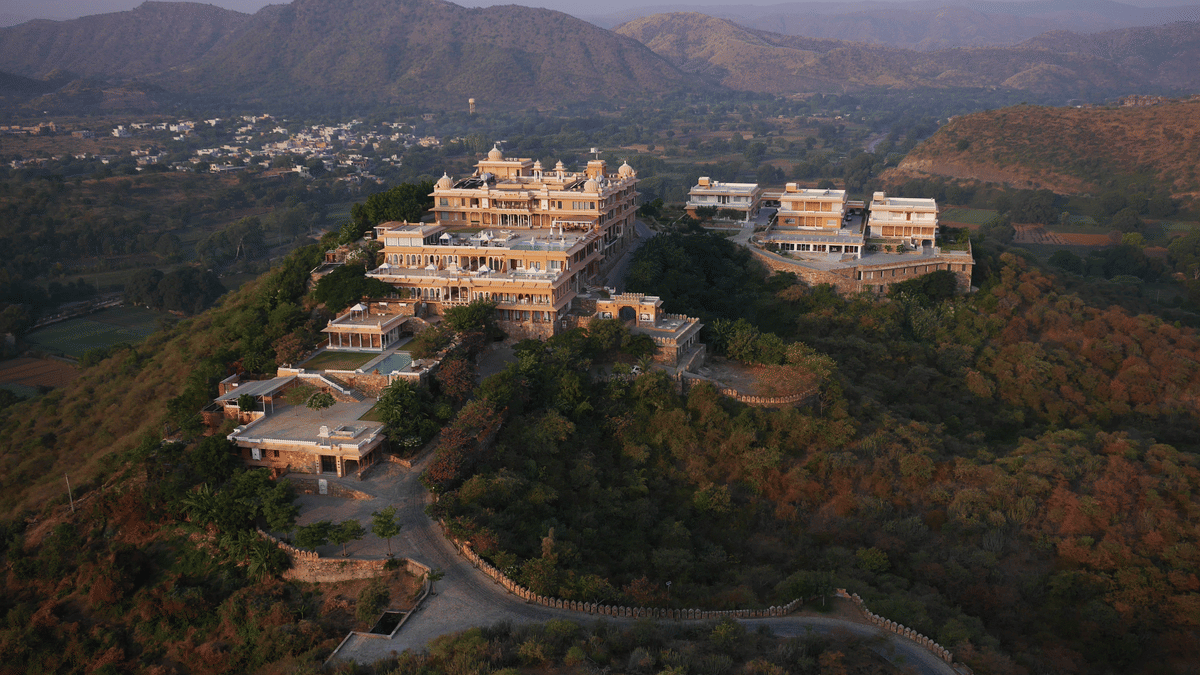
Fateh Garh rising along the natural contours of the Aravalli hills

I

Construction preserving natural mountain contours

Fateh Garh rises gently along the natural contours of the Aravalli Range, shaped by the land rather than imposed upon it. Built largely by hand and guided by traditional Vaastu principles, the structure allows natural light and airflow to regulate temperature—reducing the need for mechanical intervention while offering uninterrupted, panoramic views.
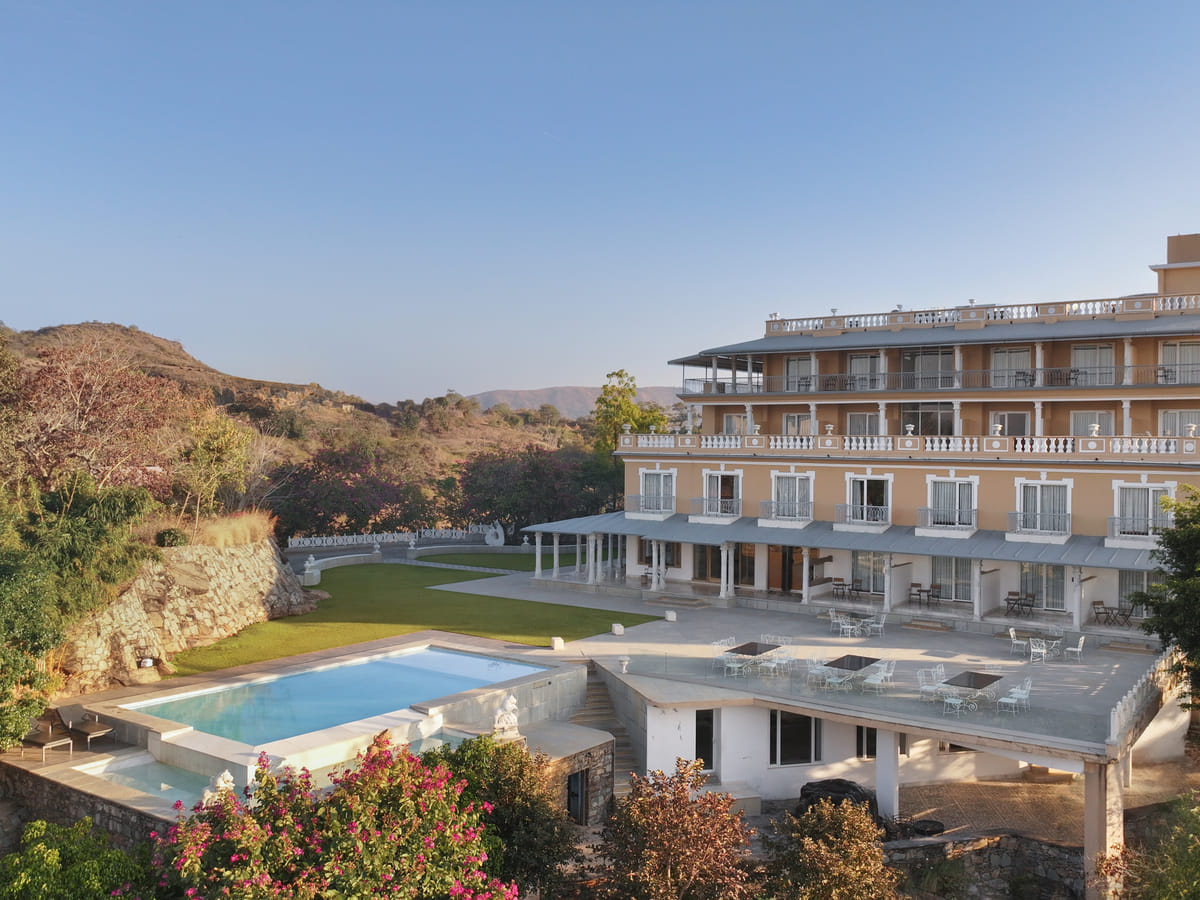
Reclaimed stone facade and carved entrance at Fateh Garh, Udaipur

II

Stone reuse & local sourcing

Every stone carries a past. Large parts of the structure have been carefully dismantled from heritage sites and reassembled—stone by stone—on the hills of Udaipur. Locally sourced materials and indigenous stone further root the architecture in its geography, reducing the need for new extraction and long-distance transport.

Low-impact development set within the natural Aravalli landscape

III

Natural habitat & biodiversity conservation

Spread across acres of the Aravalli landscape, the properties are designed to coexist with their natural surroundings. Low-impact development, renewable energy systems and chemical-free practices help preserve existing ecosystems—allowing native flora and fauna, including a rich variety of birdlife, to continue thriving undisturbed.

Local artisan crafts from the villages around Udaipur

IV

Community employment & village engagement

The relationship with the land extends to its people. Local communities are actively engaged through employment, sourcing and cultural exchange—ensuring that the region's traditions, crafts and cuisine remain an integral part of the guest experience.

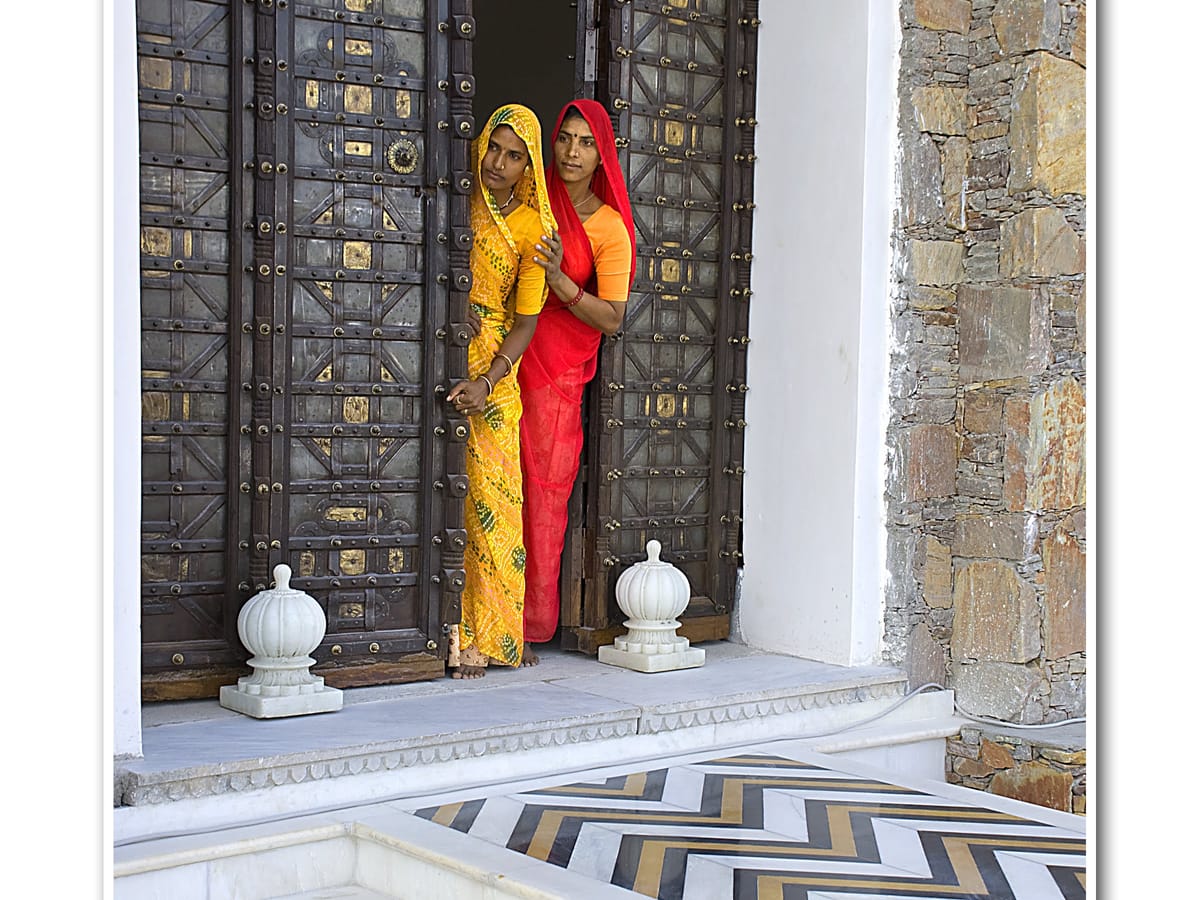
Haveli doors given a second life

Doors, timber and architectural fragments from old havelis and historic structures are given renewed life across the properties. These elements are not decorative additions, but living artefacts—carrying forward stories, craftsmanship and a sense of continuity.

Mountain stone in the architecture

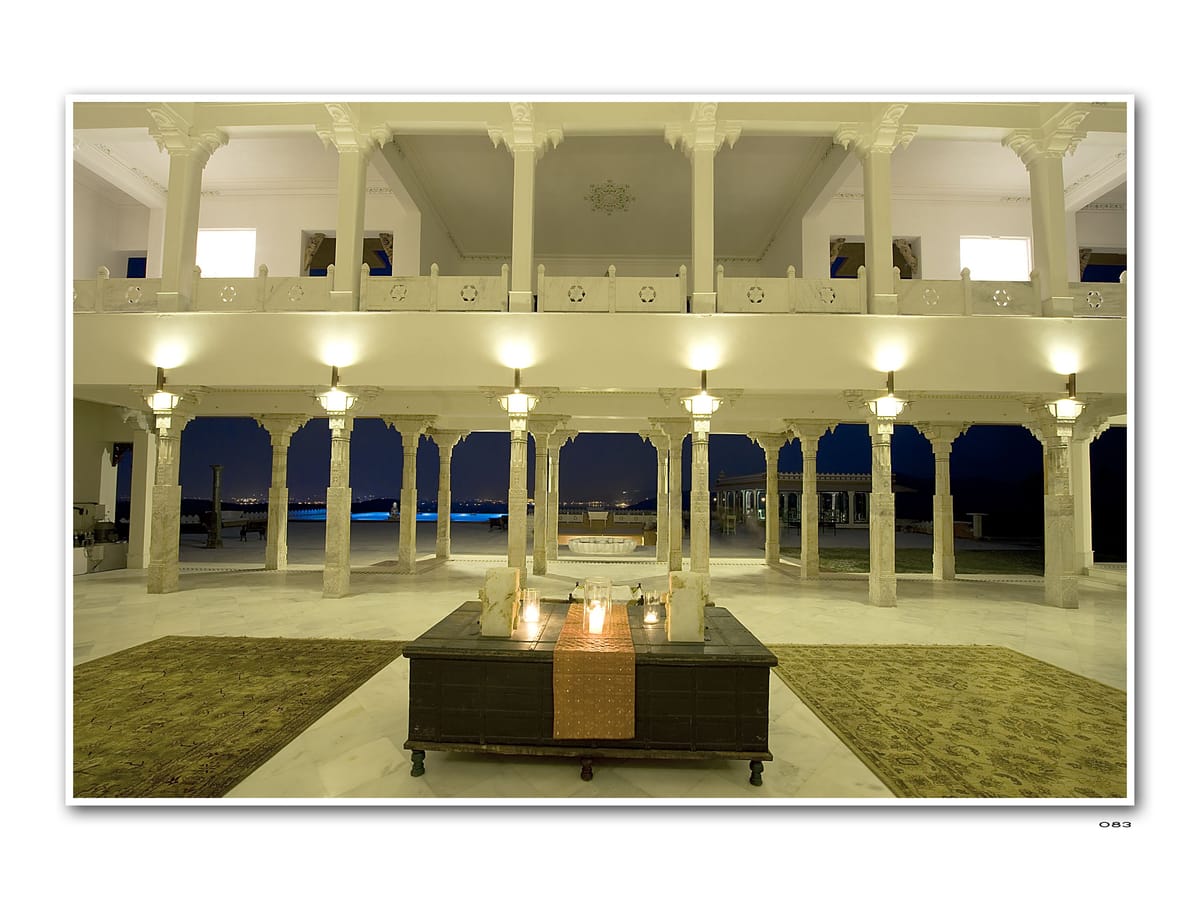
Reclaimed pillars, arches and stone details are thoughtfully integrated into spaces across Fateh Garh, Khas Mahal and Fateh Vilas. The result is an architecture that feels layered—where the ruggedness of Rajasthan's stone meets the quiet refinement of contemporary design.

Sustainable hill construction

Our approach to construction is rooted in what we call a “heritage renaissance”—reviving materials, techniques and sensibilities while integrating renewable energy and water systems suited to the terrain. It is an ongoing effort to demonstrate that luxury can exist not in excess, but in balance.

Beyond the property, into people and practice.

A Continuing Commitment

Sustainability at Fateh Collection extends beyond infrastructure. The team is largely drawn from local communities, supporting livelihoods while reducing travel impact. Each member is encouraged to carry these practices into everyday life—fostering awareness, responsibility, and a shared commitment towards a more conscious future.

A closed-loop approach to zero-waste hospitality.

Read More on Our Waste Management

Approximately 100 tonnes of food material is diverted from landfill each year through a system in which food waste feeds the dairy herd, manure and bone meal enrich the fields, and the fields grow the fodder. The full account—along with our reed-bed water treatment—is set out on its own page.

Stay With Us

Experience luxury in balance

Eight heritage properties across Udaipur, Kumbhalgarh and Ranthambhore—built with the land, powered by the sun, and run in a closed loop.