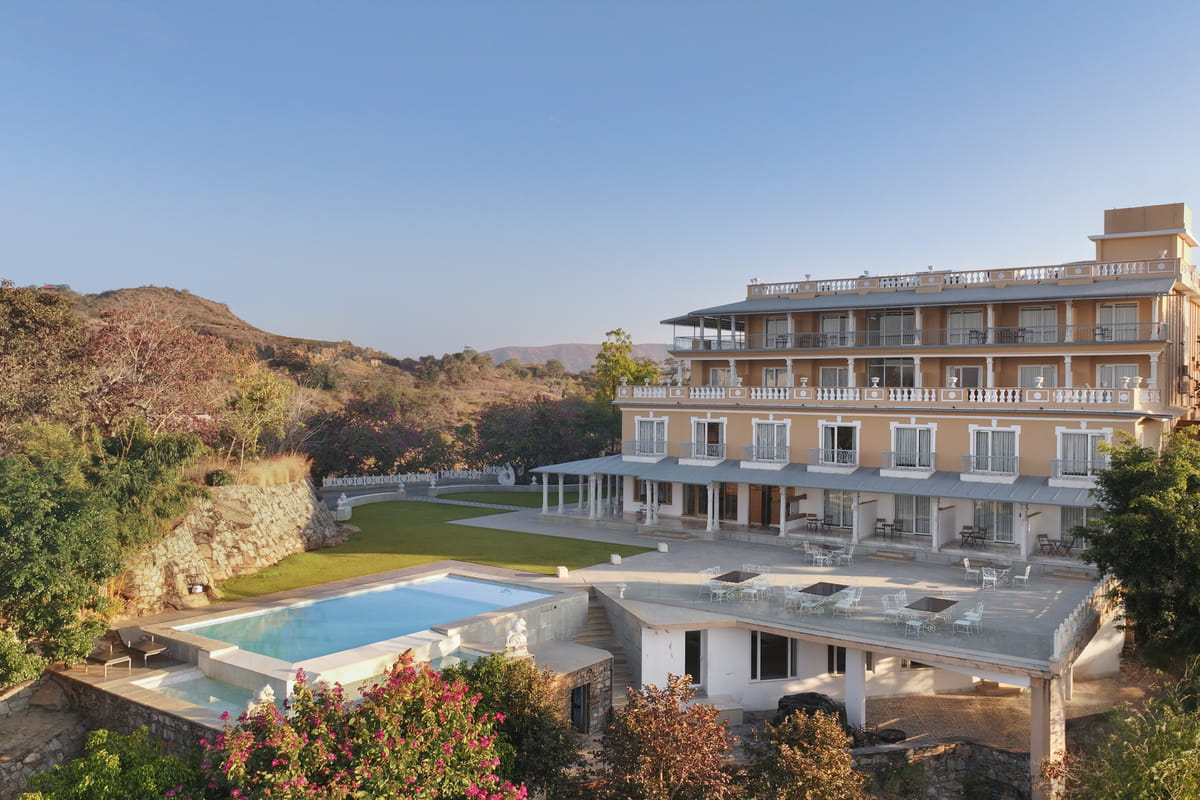
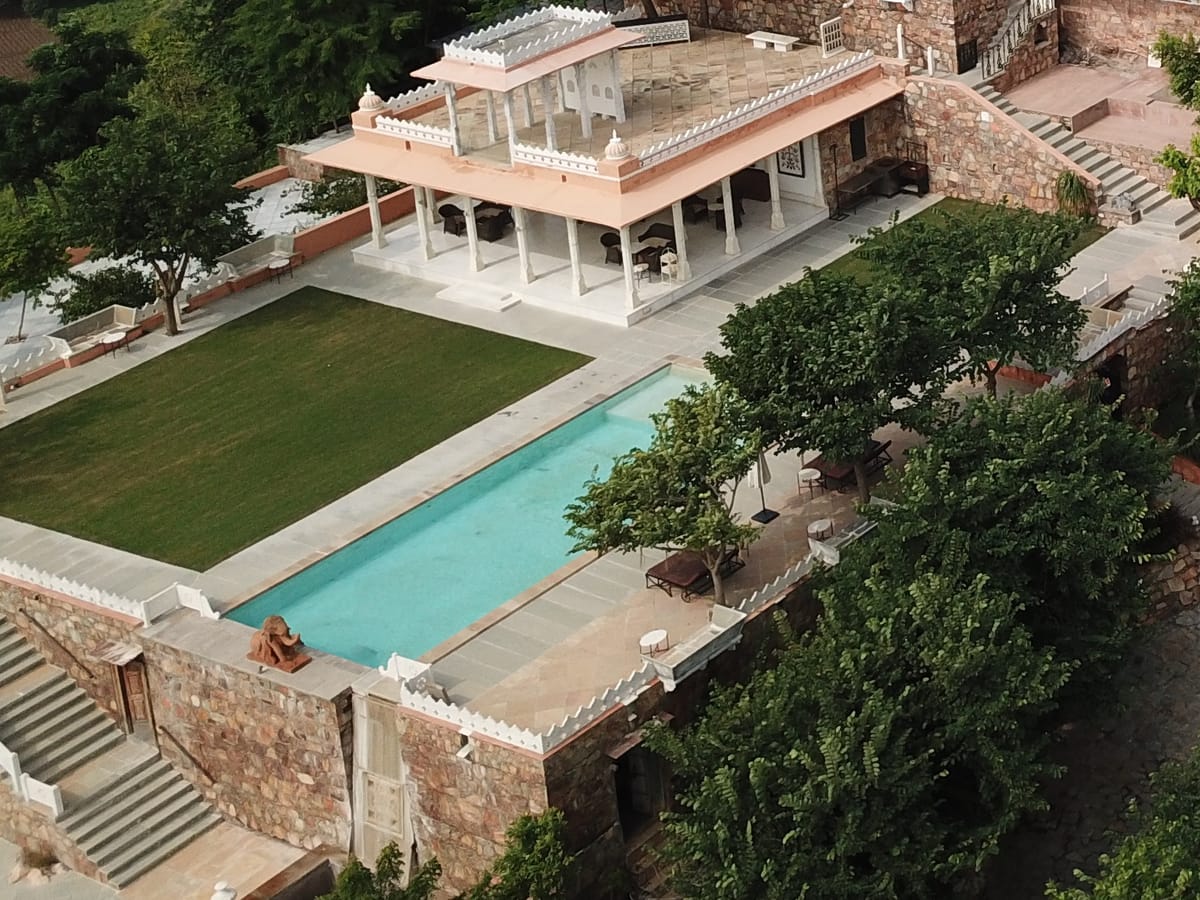
Fateh Safari Resort set within the Aravalli landscape at Kumbhalgarh

Discover Fateh Collection in...

Udaipur Kumbhalgarh Ranthambhore

Sustainable Waste Management

A closed-loop approach to zero-waste hospitality

Nothing here goes to landfill

At Fateh Collection, responsible stewardship of resources is not a trend—it is a practice rooted in the traditions of the land. Over the years we have developed a comprehensive waste management system that eliminates landfill dependency, enriches our farmland, and sustains the animals in our care.

What follows is an account of how we manage waste across our properties, in a manner that is circular, self-sustaining, and replicable.

From table to dairy to field, and back again.

The Closed Loop

Food waste feeds the animals, animals produce manure, manure enriches the soil, soil grows fodder, fodder feeds the animals—and so the loop continues. At no stage is waste consigned to a landfill, and the need for chemical fertilisers on our fields is entirely eliminated.

01

Segregation at source

All food and beverage waste is segregated at the point of disposal into two streams: vegetarian waste—cooked and uncooked plant matter, fruit peels and vegetable trimmings—and non-vegetarian waste, comprising eggshells, bones and other animal-derived material. Across our properties this amounts to approximately 7 to 8 tonnes of food waste each month.

02

From table to dairy to field

All vegetarian food waste is directed to our dairy, where it supplements the diet of our cattle. The resulting manure is collected and transferred to dedicated pits, where it matures over the course of a year. Fallen leaves, tree debris and other organic matter from the estate are added to the pits, further enriching the compost.

03

Bone meal processing

Non-vegetarian waste, including bones, is processed through an industrial pulveriser. Combined with water, it becomes a fine, porridge-like bone meal slurry—a nutrient-dense organic material exceptionally rich in phosphorus and calcium, and a highly effective natural fertiliser. It is combined with the cattle manure and applied to the fields annually.

04

The loop closes

By May or June—timed to the sowing season—the matured manure is harvested and applied to our agricultural fields. Those fields grow alfalfa and other fodder crops, which feed our cattle, horses and other animals. The same cows that process our food waste provide milk and dairy produce for our guests. At no stage is waste consigned to a landfill.

100
Tonnes of food material
diverted from landfill yearly
7–8
Tonnes of food waste
segregated every month
15–20
Tractor loads of organic
manure produced annually
Zero
Chemical fertilisers used
on our agricultural land

Treated by gravity, purified by plants.

Water & Reed Bed Technology

Rather than combining all wastewater into a single stream, we segregate and treat each independently—a slower approach that uses remarkably little energy.

Three separate streams

Wastewater is segregated into black water from toilets, grey water from showers and washbasins, and kitchen wastewater. Each stream is treated independently through its own dedicated system rather than being combined.

Grey water in 24 hours

Grey water requires comparatively less treatment and can be processed quickly. Within approximately 24 hours, treated grey water is suitable for irrigation and is used to water the greenery in and around the hotel premises.

Twelve pits, seven days

Toilet wastewater undergoes a more elaborate process. The system is primarily gravity-based, resulting in very low energy consumption—only a single oxygenator is required to maintain biological oxygen demand levels. Water entering the first pit emerges from the twelfth after seven days as treated water.

Landscaped gardens at Jai Bagh, Fateh Garh, irrigated with treated water

Reed Bed Technology

Purified through root systems

Reed plants and similar species, such as banana plants, naturally absorb and break down organic waste through their root systems. This biological treatment process helps purify wastewater in an environmentally sustainable manner, without the chemical or energy load of a conventional plant.

The treated water is then reused for gardening and other non-potable applications within the property—keeping our landscapes green without drawing further on groundwater.

A Practice Worth Reviving

This is not innovation in the conventional sense. In villages across Rajasthan, and across India, these practices were commonplace for generations.

What we have done at Fateh Collection is formalise and scale them within the context of a modern hospitality operation. We believe that this model—or elements of it—can be replicated by other establishments, whether in hospitality, agriculture, or urban food systems, wherever the will and the space exist to do so.

Rooted in the elements. Guided by balance.

More on Our Sustainability Practices

Waste is one part of a wider system. Our solar impact, conservation practices, reed-bed water treatment and the four elemental disciplines that shape how each property is built and run are set out on the main sustainability page.

Stay With Us

Experience luxury in balance

Eight heritage properties across Udaipur, Kumbhalgarh and Ranthambhore—built with the land, powered by the sun, and run in a closed loop.