History of Jagdish Mandir, Udaipur
The Jagdish Mandir, Udaipur, history begins with Maharana Jagat Singh I, who commissioned the building in 1651. He placed it just outside the royal palace, in the heart of what is now the old city. Estimates put the construction cost at roughly 1.5 million rupees, an enormous sum for the period. That scale tells you the building was never intended as a modest neighbourhood shrine for locals.
Jagat Singh I dedicated it to Vishnu, worshipped here in his form as Jagannath, Lord of the Universe. Around the main sanctum sit 4 smaller shrines, honouring Shiva, Ganesha, the Sun God, and Shakti. Together, they bring several traditions of Hindu worship into one sacred complex, an arrangement that continues to shape the movement of devotees through the temple each morning.
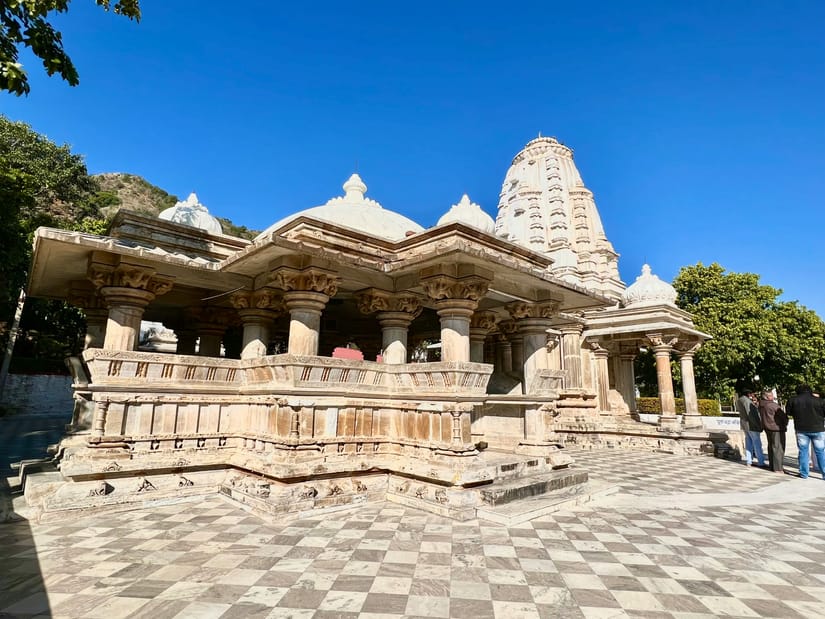
The temple complex, built around a sanctum dedicated to Vishnu as Jagannath, Lord of the Universe.
Visiting Jagdish Temple: Tickets and Timings
The Jagdish Temple, Udaipur, timings split the day into 2 darshan windows, with a long afternoon closure. Entry to the temple is free, while the timings follow its daily worship and aarti rather than a fixed sightseeing schedule. Keep the afternoon gap in mind when planning your visit.
Arriving within the first hour of either window gives you an unhurried darshan and quiet surroundings. The steps fill long before the sanctum does, and the evening aarti draws the densest gathering.
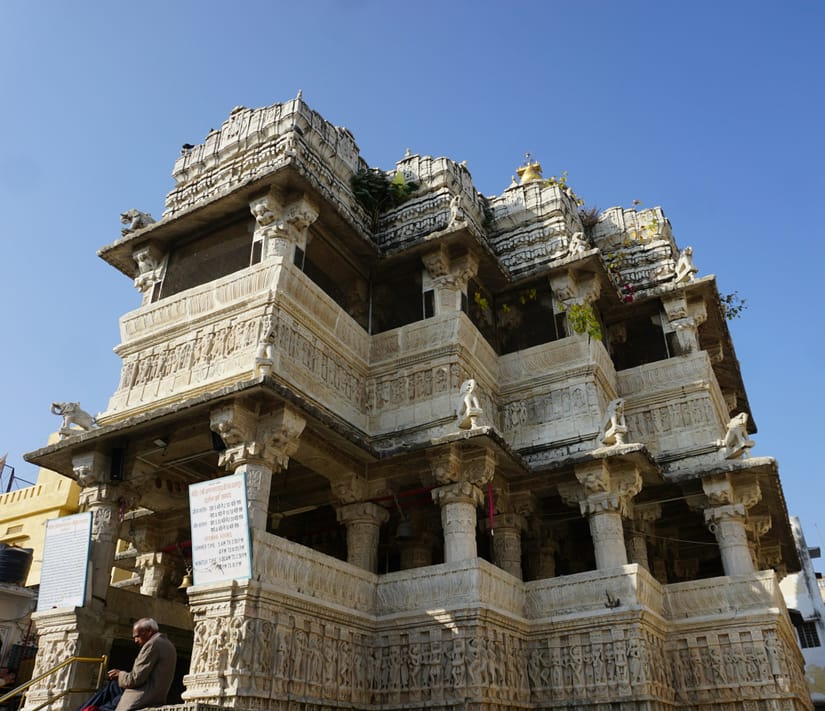
The temple’s carved facade, open for two daily darshan windows with a long afternoon closure in between.
What to See at Jagdish Mandir, Udaipur: Carved Elephants, Marble Steps, and the Brass Garuda
The approach to Jagdish Mandir, Udaipur, climbs steeply from the lane below, and the noise drops away. Carving covers almost every outer surface, so the walls repay a slow circuit before you go in. Much of what makes the building remarkable sits in details most visitors walk straight past.
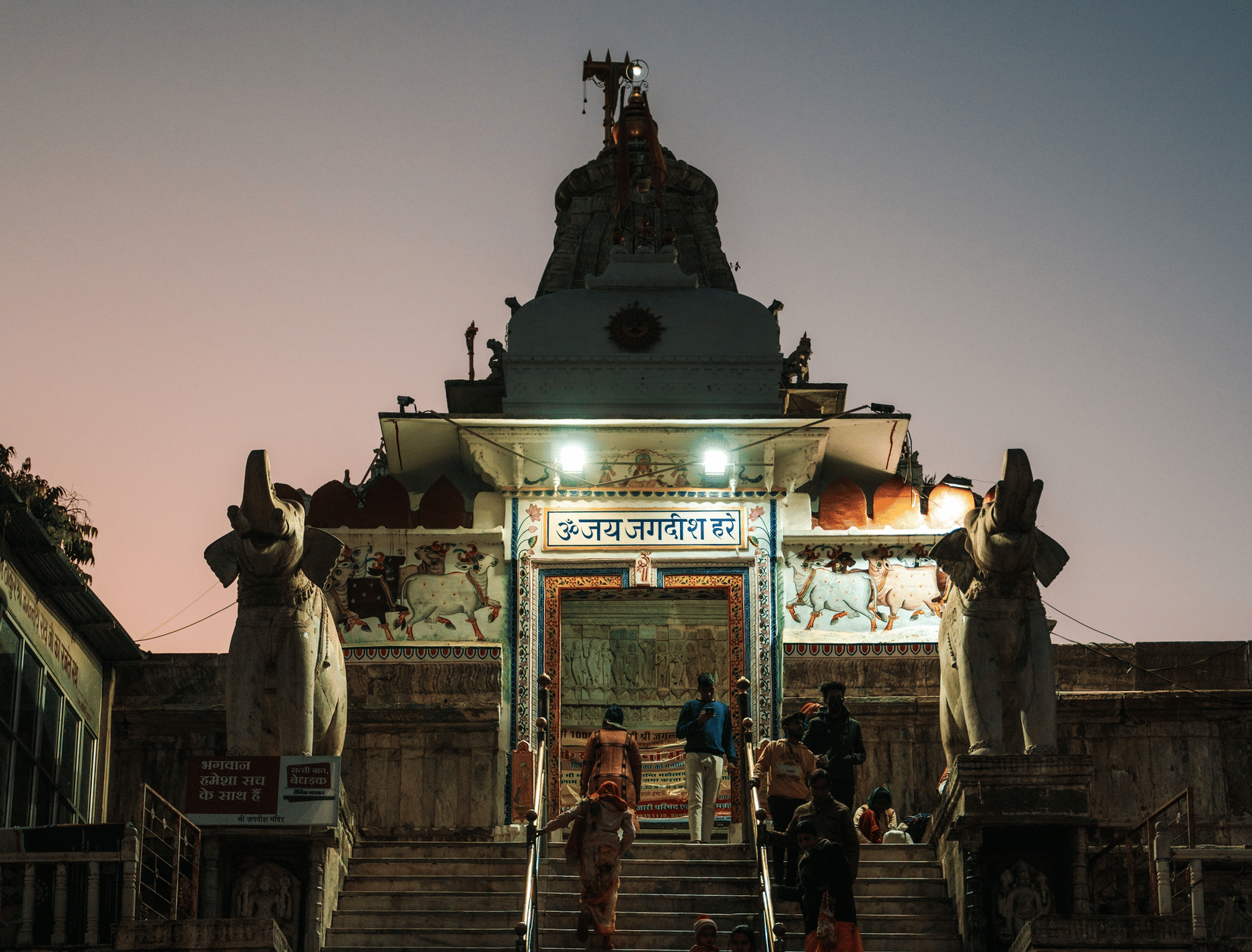
The Ascent: 32 marble steps rise to the main entrance, flanked by 2 large stone elephants.
Above the Steps: A brass image of Garuda, the mount of Vishnu, faces towards the sanctum.
The Structure: 3 storeys of hand-carved stone in the Indo-Aryan style, under a spire nearly 79 ft. high.
The Sanctum: A single black stone idol of Vishnu as Jagannath, carved with 4 arms and finery.
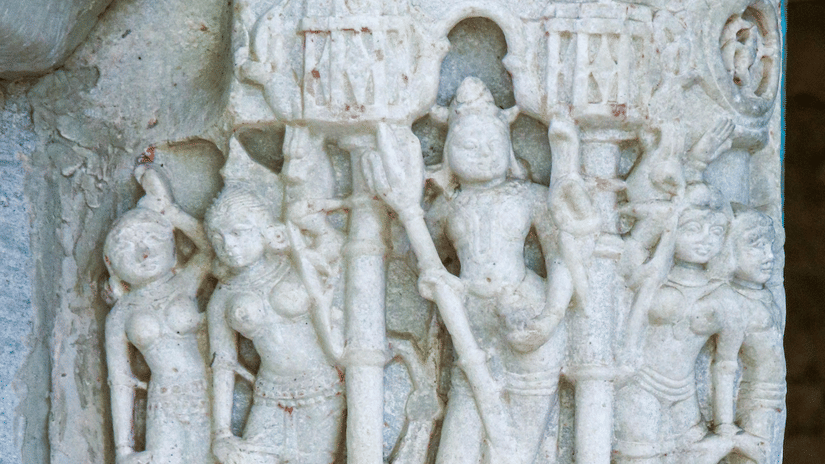
Carving covers almost every outer surface of the temple, rewarding a slow circuit before you go in.
The City Palace is just a short walk away, making it easy to visit both in the same morning. Bagore Ki Haveli, another heritage landmark near Gangaur Ghat, adds to the experience, while several other tourist attractions in Udaipur lie within the old-city lanes, making it easy to explore the area on a heritage walk.
Janmashtami at Jagdish Temple in Early September
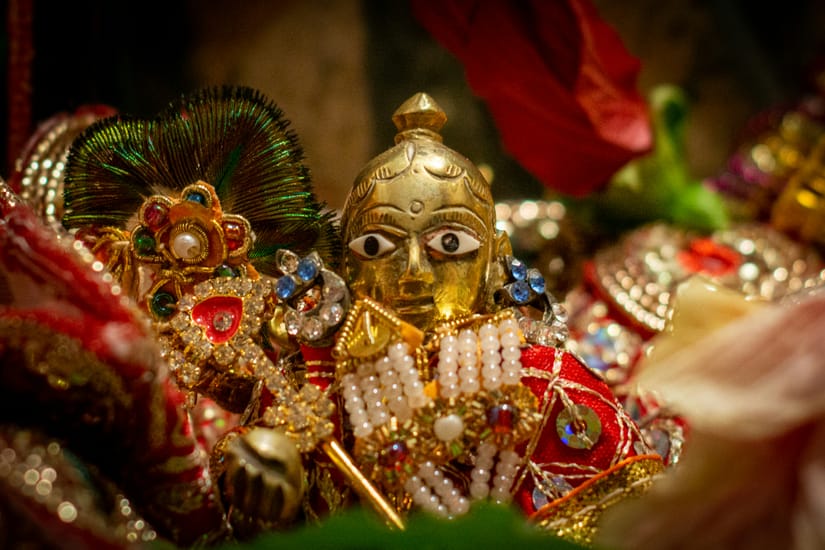
A jewelled Krishna idol at the heart of the temple’s Janmashtami celebrations.
Janmashtami turns the temple into the focal point of Krishna celebrations across the whole city. In 2026, the festival falls on Friday 4 September, and darshan queues run well past midnight. Everything about that night, from the midnight aarti to the queue management, works quite differently. The festival schedule, the alternative venues, and the practical warnings all sit in a separate guide to Janmashtami in Udaipur.
Stay at Fateh Vilas near Jagdish Temple
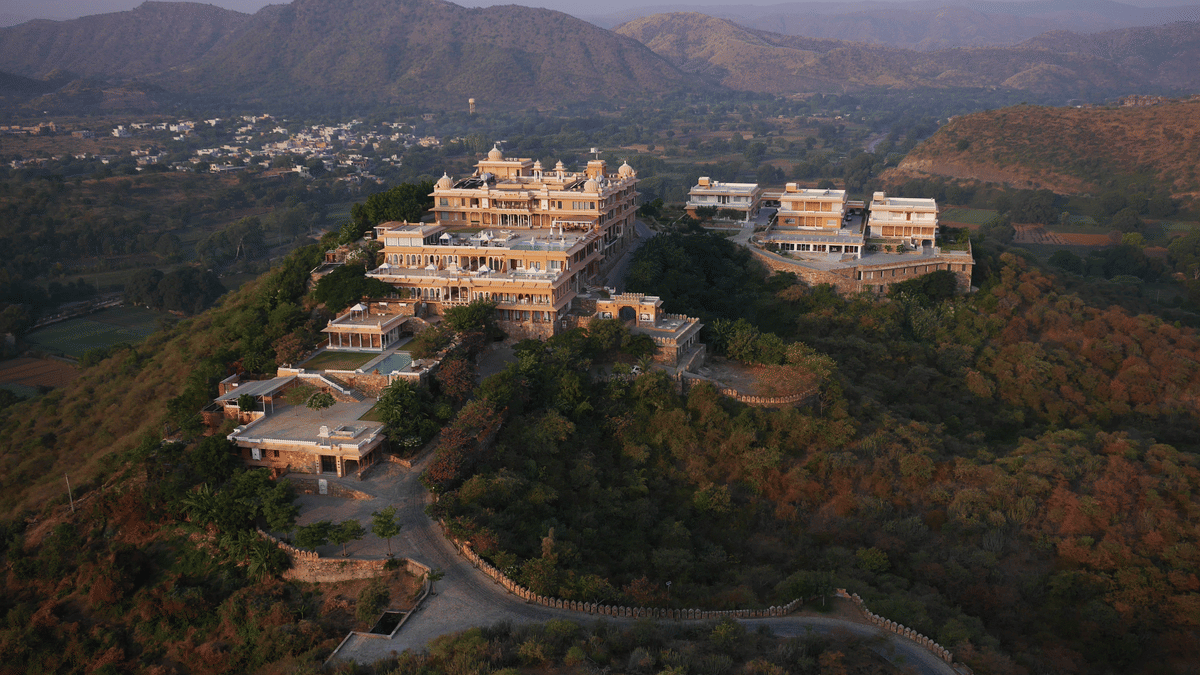
Make Fateh Vilas your base for exploring Jagdish Temple and Udaipur’s historic heart. Set in Sisarma, away from the bustle of the old city, our property is around 7 km from the temple, with a drive of roughly 20 minutes. Leave by 6:00 AM and reach the temple while the streets are still quiet, before the heat and traffic build.
The early start also puts you in a good position for the morning darshan, letting you experience the temple before the old city gathers pace. Return to the hills of Sisarma afterwards and trade crowded lanes for the calm of the Aravallis.
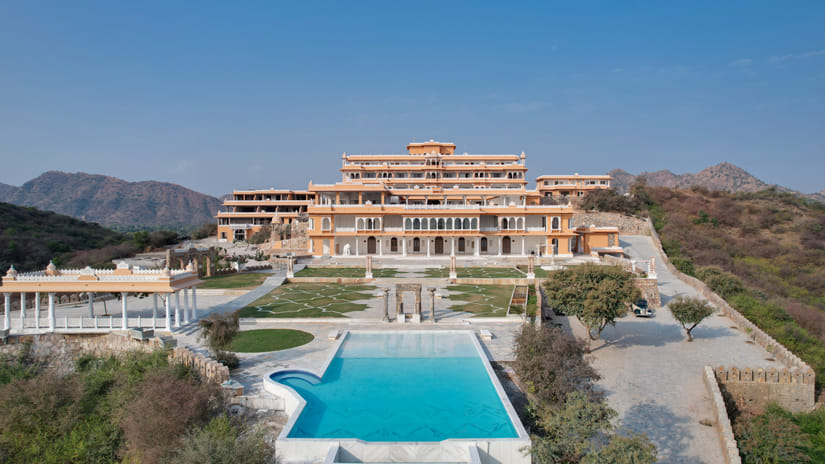
Fateh Vilas, set in Sisarma amid the Aravalli Hills, around 20 minutes from Jagdish Temple.
With the scenic views of Lake Pichola, Fateh Vilas offers a peaceful retreat after a morning exploring Udaipur’s heritage. Choose from our 5 room and suite categories, with select options featuring private plunge pools that make the return from a day of sightseeing all the more rewarding.
Ease into the afternoon at Sansha, the 2,500 sq. ft. spa, or settle in for a slower meal at our multi-cuisine restaurant, with indoor seating and a poolside terrace. With breakfast available early, the day starts just as easily when another Udaipur landmark is on your itinerary.
Jagdish Temple, Udaipur, is more than one of Udaipur’s historic landmarks. Its carved stone tells the story of its making, while its bells, lamps, and daily worship keep that story alive. Visit in the morning, witness the aartis, and the temple becomes more than something to look at. It becomes a part of Udaipur you carry with you.
Frequently Asked Questions (FAQs)
Darshan runs from 4:30 AM to 1:00 PM, then again from 5:00 PM until 8:00 PM each day. The sanctum closes through the middle of the afternoon, which catches out visitors arriving after lunch.
There are no Jagdish Temple, Udaipur, tickets on sale at the gate, and entry is free.
Maharana Jagat Singh I commissioned the building in 1651, placing it just outside the royal palace. Estimates put the construction cost at roughly 1.5 million rupees, a vast sum at the time.
A flight of 32 marble steps rises to the main entrance, flanked by 2 large stone elephants. The climb is steep, so anyone with limited mobility should allow extra time for the ascent.
The main sanctum is dedicated to Vishnu, worshipped here as Jagannath, Lord of the Universe. A single black stone idol carved with 4 arms and finery stands inside Jagdish Mandir, Udaipur.
The first hour of either darshan window is the quietest, before the steps begin to fill. The evening aarti brings the heaviest footfall, so allow extra time for darshan at that hour.
Stay at Fateh Vilas in Sisarma, Udaipur, around 7 km from Jagdish Temple, for easy access to the old city while enjoying a quieter setting amid the jungle and the Aravalli Hills.